
Molecular and Cellular Biology
KEYWORDS
- Notch receptor
- O-GlcNAc
- Glycobiology,
- Vascular endothelial cells
- Blood-brain barrier (BBB)
- Endoplasmic reticulum (ER)
- Molecular targeted therapeutics
- Glycosyltransferase
HEAD
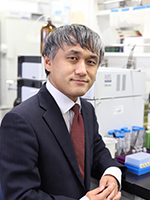
LAB MEMBER
| Faculty | Position | Researchers |
|---|---|---|
| TASHIMA Yuko | Lecturer | Researchers |
| KONDO Yuji | Lecturer | Researchers |
| HASHIMOTO Noboru | Designated Assistant Professor | Researchers |
CONTACT
| tokajima◎med.nagoya-u.ac.jp (Please send a message after replacing "◎" mark with "@" mark. ) | |
| HP | Private Page |
OUTLINE
Our research aims to elucidate the roles of glycoproteins in regulating cellular functions, proliferation, and differentiation, particularly in cancer cells, neural cells, and surrounding vascular cells, with the goal of developing novel therapies for cancer and neurological disorders. To achieve this, we pursue the following approaches:
We investigate the quality control mechanisms of O-glycans on Notch receptors to develop new therapeutic strategies for hereditary vascular dementia such as CADASIL.
This project investigates glycan modifications in tumor tissues and seeks to regulate EGF signaling based on glycan structures, with the goal of developing glycan-targeted cancer therapies.
Using mass spectrometry-based glycoproteomics, we identify disease-associated glycan structures and evaluate their potential as biomarkers for diagnostics and drug discovery.
Focusing on congenital disorders associated with glycosylation defects and developmental abnormalities, we use genome-edited cells and mouse models to uncover the molecular roles of glycans in developmental processes.
By leveraging databases such as DepMap, we identify glycan-related genes essential for cancer survival and propose novel therapeutic strategies with reduced side effects.
We analyze bidirectional signaling between immune cells and cancer cells mediated by glycan-recognizing checkpoint molecules, Siglecs, to elucidate mechanisms regulating immune responses and tumor progression.
Our laboratory participates in collaborative glycome research as part of the Large-scale Academic Frontier Promotion Program supported by the Ministry of Education, Culture, Sports, Science and Technology (MEXT). Each project aims to uncover the roles and structures of glycans in order to better understand the causes of diseases and develop new therapeutic strategies.
Glycans are essential components involved in many biological processes, such as cell-to-cell communication and immune function. However, their full complexity remains largely unexplored. By applying cutting-edge research technologies, our laboratory seeks to reveal the complete picture of glycan biology and contribute to the advancement of medicine and life sciences.
RESEARCH PROJECTS
- Quality Control of O-Glycans on Notch Receptors and Their Role in Vascular Dementia
- Role of O-Glycans in EGF Signaling and Tumor Suppression
- Glycoproteomics-Based Discovery of Disease Biomarkers and Applications in Drug Development
- Molecular Pathogenesis of Glycan-Related Disorders
- Identification of Glycan-Related Therapeutic Targets Using Public Databases
- Bidirectional Immune-Cancer Signaling via Glycan Immune Checkpoint Molecule Siglecs
Under this overarching theme, our goal is to translate fundamental research findings in medicine and biology into practical applications in clinical settings.
BIBLIOGRAPHY
2025
- Kondo Y, Jiang Y, Geng X, Song J, Simeroth S, McDaniel JM, Yu P, Srinivasan RS, Xia L. Site-1 protease-mediated cholesterol metabolism is essential for lymphatic development in mice. JCI Insight. 2025 Oct 22;10(20).
2024
- Kondo Y, Li Y, Okajima T. Efficient Escorting Strategy for Aggregation-Prone Notch EGF Repeats with Sparcl1. Molecules. 2024 Feb 27;29(5).
- Huang L*, Kondo Y*, Cao L, Han J, Li T, Zuo B, Yang F, Li Y, Ma Z, Bai X, Jiang M, Ruan C, Xia L (*co-first). Novel GNE missense variants impair de novo sialylation and cause defective angiogenesis in the developing brain in mice. Blood Adv. 2024 Feb 27;8(4):991-1001.
2023
- Kondo Y Okajima T. Inhibitory machinery for the functional dystroglycan glycosylation. J Biochem. 2023 Apr 26173(5):333-335.
2021
- Kondo Y, Larabee JL, Gao L, Shi H, Shao B, Hoover CM, McDaniel JM, Ho YC, Silasi-Mansat R, Archer-Hartmann SA, Azadi P, Srinivasan RS, Rezaie AR, Borczuk A, Laurence JC, Lupu F, Ahamed J, McEver RP, Papin JF, Yu Z, Xia L. L-SIGN is a receptor on liver sinusoidal endothelial cells for SARS-CoV-2 virus. JCI Insight. 2021 Jul 22;6(14). doi: 10.1172/jci.insight.148999.
- Ma X*, Li Y*, Kondo Y*, Shi H, Han J, Jiang Y, Bai X, Archer-Hartmann SA, Azadi P, Ruan C, Fu J, Xia L (*co-first). Slc35a1 deficiency causes thrombocytopenia due to impaired megakaryocytopoiesis and excessive platelet clearance in the liver. Haematologica. 2021 Mar 1;106(3):759-769. doi: 10.3324/haematol.2019.225987. PubMed PMID: 32303557; PubMed Central PMCID: PMC7927894.
We welcome inquiries from those interested in glycoscience. Our research spans a broad spectrum from fundamental studies to applied science, and we look forward to working together on these exciting themes.
