
Nagoya University-MENARD Collaborative Research Chair
KEYWORDS
- Regenerative Medicine
- Personal Science
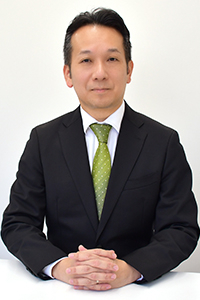
HEAD
LAB MEMBER
| Faculty | Position | Researchers |
|---|---|---|
| HASEBE Yuichi | Designated Lecturer | Researchers |
| MIKA KAWAGISHI-HOTTA | Designated Assistant Professor | Researchers |
| OKUNO Ryosuke | Designated Assistant Professor | Researchers |
CONTACT
| k-info◎menard.co.jp (Please send a message after replacing "◎" mark with "@" mark. ) | |
| HP | Private Page |
OUTLINE
This laboratory is the first industry-academia collaborative research program established by Menard Cosmetics Japan Co., Ltd. at Nagoya University Graduate School of Medicine on May 1, 2013.
By integrating and synergizing the extensive research technologies and achievements held by Nagoya University and Menard Cosmetics Japan Co., Ltd., we aim to advance life sciences, accelerate research and development for enhancing beauty and health, and contribute to extending both “healthy life expectancy” and “social life expectancy” through the development of technologies and products (quasi-drugs, cosmetics, health foods, etc.) that enrich our lives.

RESEARCH PROJECTS
1. Stem Cell Research Field
In collaboration with Fujita Health University School of Medicine (Department of Dermatology, Department of Applied Cellular Regenerative Medicine) and Nippon Menard Cosmetic Co., Ltd., we are analyzing stem cells from Japanese skin. We are researching the relationship between stem cells and various aging phenomena that appear with age, advancing technological development to enable beautiful, youthful, and healthy daily living for a lifetime.
2. Genetic Research Field
Multiple SNPs (Single Nucleotide Polymorphisms) exist within DNA sequences, representing single-base differences between individuals. It has been established that variations in these SNPs influence individual constitution and susceptibility to disease. Our department conducts research into identifying SNPs related to skin type and constitution, as well as developing analytical techniques for their study.
3. Material Development Research Field
To date, we have collaborated with Bioscience and Biotechnology Center Nagoya University and Nippon Menard Cosmetic Co., Ltd. to explore rice seeds as raw materials for more effective cosmetics and health foods. We have identified excellent skin roughness prevention and anti-aging effects in extracts derived from original rice varieties held by Nagoya University, contributing to product development.
BIBLIOGRAPHY
2025
- Okuno R, Hasegawa S, Hasebe Y, Kawagishi-Hotta M, Yamada T, Ishii Y, Arima M, Iwata Y, Sugiura K, Akamatsu H: Site-Specific Expression of HOXA Genes in Skin and its Effect on Skin Elasticity. J Invest Dermatol. 2025 Nov;145(11):2789-2797.
2023
- Okuno R, Inoue Y, Hasebe Y, Igarashi T, Kawagishi-Hotta M, Yamada T, Hasegawa S: Genome-wide association studies in the Japanese population identified genetic loci and target gene associated with epidermal turnover. Exp Dermatol. 2023 Oct; 32(10): 1856-1863.
- Okuno R, Igarashi T, Hasebe Y, Kawagishi-Hotta M, Hasegawa S: A genome-wide association study identified a genetic variant associated with hair thinning in Japanese women. J Cosmet Dermatol., 2023 Sep;22(9):2616-2618.
2022
- Inoue Y, Igarashi T, Hasebe Y, Kawagishi-Hotta M, Okuno R, Yamada T, Hasegawa S: Identification of mitochondrial genetic variants associated with human corneocyte size in Japanese women. Exp Dermatol. 2022 Dec;31(12):1944-1948.
- Okuno R, Inoue Y, Hasebe Y, Igarashi T, Kawagishi-Hotta M, Yamada T, Hasegawa S: Genome-wide association studies in Japanese women identified genetic loci associated with wrinkles and sagging. Exp Dermatol., 2022 Sep;31(9):1411-1420.
- Inoue Y, Hasebe Y, Igarashi T, Kawagishi-Hotta M, Okuno R, Yamada T, Hasegawa S: Analysis of the effect of daily stress on the skin and search for genetic loci involved in the perceived stress of an individual. Skin Health Dis. 2022 Apr 1;2(3):e110.
- Kawagishi-Hotta M, Hasegawa S, Hasebe Y, Inoue Y, Okuno R, Arima M, Iwata Y, Sugiura K, Akamatsu H: Increase in inhibin beta A/Activin-A expression in the human epidermis and the suppression of epidermal stem/progenitor cell proliferation with aging. J Dermatol Sci., 2022 Jun;106(3):150-158
2021
- Inoue Y, Hasebe Y, Igarashi T, Kawagishi-Hotta M, Okuno R, Yamada T, Hasegawa S: Search for genetic loci involved in the constitution and skin type of a Japanese women using a genome-wide association study. Exp Dermatol., 2021 Dec;30(12): 1787-1793
- Kawagishi-Hotta M, Hasegawa S, Inoue Y, Hasebe Y, Arima M, Iwata Y, Sugiura K, Akamatsu H: Gremlin 2 suppresses differentiation of stem/progenitor cells in the human skin. Regen Ther., 2021 Jul 12:18:191-201.
- Inoue Y, Hasegawa S, Hasebe Y, Kawagishi-Hotta M, Okuno R, Yamada T, Adachi H, Miyachi K, Ishii Y, Sugiura K, Akamatsu H: Establishment of Three Types of Immortalized Human Skin Stem Cell Lines Derived from the Single Donor. Biol Pharm Bull., 2021 Oct, 44(10): 1403-1412.
List of 10 representative papers from the past five years.
MESSAGE
Nagoya University and Nippon Menard Cosmetic Co., Ltd, Collaborative Research Chair was established on May 1, 2013. Our purpose is to create new products that can truly contribute to the society through the cooperation to share and merge our techniques, knowledge, and know-how.
Japan is facing the rapid development of a declining birthrate and a growing population of elderly people, and other developed countries are following the trend.
A greater population of elderly people is going to be a worldwide big concern in the near future, and needs for medical, cosmetic and health services are expected to grow increasingly.
To meet these needs, this collaborative research chair aims for (i) innovation of the technologies utilized for developing products (medicines, quasi-drugs, cosmetics, and health foods etc.) that will help make our life more comfortable, (ii) activation of
the whole health care industry, including the marketing of new products, and also (iii) advancement of life science research, which will support all these efforts.
The most advanced equipment and an accumulated product of much research at Nagoya University enable our collaborative research chair to develop and strengthen basic research that lays the groundwork for manufacturing. In combination with the manufacturing know-how and the distribution channels, we aim to establish technologies that truly contribute to our society through creating and stably supplying new products and services for better QOL (Quality of Life).
