
Fundamental Development for Advanced Low Invasive Diagnostic Imaging
KEYWORDS
- Diffusion MRI
- 4D Flow MRI & AI Imaging Diagnosis
HEAD
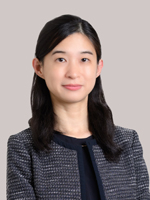
LAB MEMBER
| Faculty | Position | Researchers |
|---|---|---|
| HYODO Ryota | Designated Lecturer | Researchers |
CONTACT
| jikken.rad◎gmail.com (Please send a message after replacing "◎" mark with "@" mark. ) | |
| HP | Private Page |
OUTLINE
Our laboratory aims to develop highly accurate, low-invasive diagnostic imaging methods using radiation-free MRI technologies, such as Diffusion MRI and 4D Flow MRI. We focus on establishing AI-aided diagnostic systems, advanced cancer diagnosis, and hemodynamic analysis to contribute to optimal treatment selection for each patient.
RESEARCH PROJECTS
1. Development of Novel Cancer Diagnostics via Advanced Imaging
We conduct multifaceted analyses of various imaging technologies, represented by non-invasive diffusion MRI (IVIM, non-Gaussian diffusion, etc.), to elucidate detailed tissue structures and biological characteristics of tumors, particularly in breast cancer. Furthermore, we aim to utilize these findings for more detailed pathological assessment and precise clinical diagnosis. We are also developing systems to support diagnostic imaging using AI.
2. Hemodynamic Analysis and Elucidation of Vascular Pathology using 4D Flow MRI
Using 3D Cine Phase Contrast MRI (4D Flow), we visualize and analyze blood flow vectors and wall shear stress. We aim to clarify the relationship between hemodynamics and vascular diseases (e.g., aneurysms, dissection) for better prediction and treatment planning.
BIBLIOGRAPHY
2025
- ISMRM Workshop on 40 Years of Diffusion (Co-chair, 2025)
2023
- The 51st Meeting of the Japanese Society of Tomography (Organizer, 2023)
2022
- The 50th Annual Meeting of the JSMRM (Vice President, 2022)
2020
- The 2nd 4D Flow Workshop (Organizer, 2020)
2018
- The 3rd Annual Scientific Meeting of the Japanese Chapter of ISMRM (Organizer, 2018)
MESSAGE
We aim to establish low-invasive, high-precision imaging. We welcome those eager to pioneer next-generation medicine through medical-engineering integration.
