
Clinical research education
KEYWORDS
- Clinical research education
- Clinical research design
- Development of human resource
HEAD
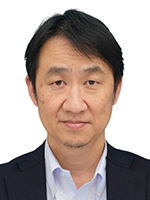
LAB MEMBER
| Faculty | Position | Researchers |
|---|---|---|
| IMAIZUMI Takahiro | Lecturer | Researchers |
| TAKADA Yoshihisa | Assistant Professor | Researchers |
| HANDA Tomoko | Assistant Professor | Researchers |
| ITO Daisuke | Assistant Professor | Researchers |
CONTACT
| cre◎med.nagoya-u.ac.jp (Please send a message after replacing "◎" mark with "@" mark. ) |
OUTLINE
Vision: To support clinical research across all medical specialties through high-quality education in clinical research.
Department of Clinical Research Education at Nagoya University is launched in April 2021. Its core missions are: (1) developing clinical research professionals who can plan and execute studies with a clear pathway to implementation and impact, (2) providing comprehensive support for a wide range of clinical research projects in collaboration with the department of Advanced Medicine, and (3) creating a collaborative platform for clinical research that transcends specialties, departments, and professional roles.
To address key challenges—such as strengthening foundational competencies in study design, biostatistics, and research ethics; improving the ability to disseminate findings in international journals; and reducing disparities in research capacity among affiliated hospitals—we promote an integrated approach that combines education and research support. Our initiatives are built on structured educational programs, hands-on practical training, and a sustainable framework for continuous support.
RESEARCH PROJECTS
We advance education, research support, and infrastructure development in an integrated manner to improve the quality and productivity of clinical research. In the educational domain, we continuously provide seminars and learning opportunities that systematically cover essential competencies for clinical research, including study design, biostatistics, and research ethics. We also offer an on-the-job training (OJT) program in which early-career physicians and other trainees learn through hands-on experience in research support activities, and we develop online learning materials that enable self-paced, repeated study.
In research support, we conduct pre-submission reviews of study planning documents (e.g., research plan summaries) to enhance consistency among study objectives, endpoints, statistical analysis plans, and ethical considerations, thereby reducing rework at the planning stage. In addition, we provide support with an eye toward ethics review and study operations, and we are building a system of close, ongoing accompaniment—from study initiation and management through analysis and dissemination of results (including publication).
As a department-led initiative, we also conduct research aimed at promoting clinical research digital transformation (DX), including standardizing study documentation through comprehensive templates and implementing AI-assisted review support for study plans. These efforts seek to improve the consistency and speed of support services and to reduce operational burden. To facilitate the use of routinely collected clinical data (real-world data) for research, we are developing an environment that connects data exploration and visualization to analysis, and we aim to accelerate the research cycle through mechanisms that enable data extraction and provision based on submitted research proposals.
In collaboration with affiliated hospitals, we combine regular online research consultations, hybrid (on-site and online) educational offerings, and remote expert support. Through these activities, we promote shared research infrastructure and unified quality management so that high-quality studies can be conducted across multiple institutions. Ultimately, we aim to foster multicenter collaborative research and to build a clinical research network that meets international standards.
BIBLIOGRAPHY
2026
- Increased HbA1c relative to actual glycemic control in patients treated with sodium-glucose cotransporter 2 inhibitors. Mizutani K, Uenishi E, Onoue T, Maeda R, Suzuki K, Handa T, Kobayashi T, Iwama S, Miyata T, Sugiyama M, Hagiwara D, Suga H, Okazaki M, Hashizume A, Arima H. J Diabetes Investig. 2026;17:34-41.
2025
- Longitudinal transitions in frailty and health-related quality of life investigated by a 5-year community study. Oishi R, Segi N, Okazaki M, Ito S, Ouchida J, Yamauchi I, Seki T, Takegami Y, Ishizuka S, Hashizume A, Hasegawa Y, Imagama S, Nakashima H. Sci Rep. 2025 Apr 30;15(1):15162. doi: 10.1038/s41598-025-99843-7.
- Re-evaluation of blood culture contamination rates: Discordance between clinical and laboratory assessment. Hamada H, Morioka H, Okazaki M, Hashizume A, Kanda K, Oka K, Iguchi M, Yagi T. J Infect Chemother. 2025 Apr;31(4):102628. doi: 10.1016/j.jiac.2025.102628.
- Diffuse but Non-homogeneous Brain Atrophy: Identification of Specific Brain Regions and Their Correlation with Clinical Severity in Rett Syndrome. Narita H, Natsume J, Suzuki T, Shiohama T, Kawaguchi M, Okazaki M, Hashizume A, Naganawa S, Ito Y, Yamamoto H, Nakata T, Kidokoro H, Takahashi Y, Takahashi S, Tsujimura K. Brain Dev. 2025 Mar 26;47(3):104348. doi: 10.1016/j.braindev.2025.104348.
- Plasma Metabolite Profiles Between In-Center Daytime Extended-Hours and Conventional Hemodialysis. Takami N, Okazaki M, Ozeki T, Imaizumi T, Nishibori N, Kurasawa S, Hishida M, Akiyama S, Saito R, Hirayama A, Kasuga H, Kaneda F, Maruyama S. Kidney360. 2025 Mar 1;6(3):420-431. doi: 10.34067/KID.0000000675.
- Comparison of Early-onset Efficacy of Anti-calcitonin Gene-related Peptide Monoclonal Antibodies for Patients with Migraine in Real-world Clinical Practice: Study Protocol for an Exploratory Clinical Trial. Tanei T, Maesawa S, Nishimura Y, Ishizaki T, Nagashima Y, Hashida M, Yamamoto S, Ando M, Kuwatsuka Y, Hashizume A, Wakabayashi T, Saito R. Neurol Med Chir (Tokyo). 2025 Feb 15;65(2):71-80. doi: 10.2176/jns-nmc.2024-0201.
- Longitudinal impact of extended-hours hemodialysis with a liberalized diet on nutritional status and survival outcomes: findings from the LIBERTY cohort. Imaizumi T, Okazaki M, Hishida M, Kurasawa S, Nishibori N, Nakamura Y, Ishikawa S, Suzuki K, Takeda Y, Otobe Y, Kondo T, Kaneda F, Kaneda H, Maruyama S. Clin Exp Nephrol. 2025 Jan 28. doi: 10.1007/s10157-024-02602-7.
- Guidance on Energy Intake Based on Resting Energy Expenditure and Physical Activity: Effective for Reducing Body Weight in Patients with Obesity. Handa T, Onoue T, Maeda R, Mizutani K, Suzuki K, Kobayashi T, Miyata T, Sugiyama M, Hagiwara D, Iwama S, Suga H, Banno R, Arima H. Nutrients. 2025 Jan 7;17(2):202. doi: 10.3390/nu17020202.
- Registry-Based Assessment of Shunt Operation Methods and Outcomes in Idiopathic Normal Pressure Hydrocephalus (RASHOMON Study): Protocol for a Multicenter Prospective Observational Cohort Study. Okumura E, Takeuchi K, Momota H, Nagatani T, Taoka T, Aimi Y, Hashizume A, Okazaki M, Saito R. JMIR Res Protoc. 2025;14:e80678.
2024
- Impact of periodic neck ultrasonography on locoregional disease control in surveillance after total thyroidectomy for patients with low- and intermediate-risk papillary thyroid carcinoma: a propensity score-matched study. Inaishi T, Takeuchi D, Ichikawa T, Inaguma G, Hashizume A, Okazaki M, Masuda N, Kikumori T. Endocr J. 2024 Dec 2;71(12):1135-1143. doi: 10.1507/endocrj.EJ24-0194.
- Conventional magnetic resonance imaging key features for distinguishing pathologically confirmed corticobasal degeneration from its mimics: a retrospective analysis of the J-VAC study. Sakurai K, Tokumaru AM, Yoshida M, Saito Y, Wakabayashi K, Komori T, Hasegawa M, Ikeuchi T, Hayashi Y, Shimohata T, Murayama S, Iwasaki Y, Uchihara T, Sakai M, Yabe I, Tanikawa S, Takigawa H, Adachi T, Hanajima R, Fujimura H, Hayashi K, Sugaya K, Hasegawa K, Sano T, Takao M, Yokota O, Miki T, Kobayashi M, Arai N, Ohkubo T, Yokota T, Mori K, Ito M, Ishida C, Idezuka J, Toyoshima Y, Kanazawa M, Aoki M, Hasegawa T, Watanabe H, Hashizume A, Niwa H, Yasui K, Ito K, Washimi Y, Kubota A, Toda T, Nakashima K, Aiba I; J-VAC study group. Neuroradiology. 2024 Nov;66(11):1917-1929. doi: 10.1007/s00234-024-03432-w.
- Comparing preprocessing strategies for 3D-Gene microarray data of extracellular vesicle-derived miRNAs. Takemoto Y, Ito D, Komori S, Kishimoto Y, Yamada S, Hashizume A, Katsuno M, Nakatochi M. BMC Bioinformatics. 2024 Jun 20;25(1):221. doi: 10.1186/s12859-024-05840-4.
- Association of calciprotein particles with serum phosphorus among patients undergoing conventional and extended-hours haemodialysis. Nishibori N, Okazaki M, Miura Y, Hishida M, Kurasawa S, Imaizumi T, Kato N, Kosugi T, Kuro-O M, Kasuga H, Kaneda F, Maruyama S. Clin Kidney J. 2024 May 6;17(6):sfae121. doi: 10.1093/ckj/sfae121.
- Safety and efficacy of aceneuramic acid in GNE myopathy: open-label extension study. Suzuki N, Mori-Yoshimura M, Katsuno M, Takahashi MP, Yamashita S, Oya Y, Hashizume A, Yamada S, Nakamori M, Izumi R, Kato M, Warita H, Tateyama M, Kuroda H, Asada R, Yamaguchi T, Nishino I, Aoki M. J Neurol Neurosurg Psychiatry. 2024 Oct 16;95(11):1093-1094. doi: 10.1136/jnnp-2024-333853.
- Association between stopping renin-angiotensin system inhibitors immediately before hemodialysis initiation and subsequent cardiovascular events. Nakamura Y, Inaguma D, Imaizumi T, Kurasawa S, Hishida M, Okazaki M, Fujishima Y, Nishibori N, Suzuki K, Takeda Y, Maruyama S. Hypertens Res. 2024 May;47(5):1372-1379. doi: 10.1038/s41440-024-01616-8.
- Relationship between peak aortic jet velocity and progression of aortic stenosis in patients undergoing hemodialysis. Kurasawa S, Imaizumi T, Kondo T, Hishida M, Okazaki M, Nishibori N, Takeda Y, Kasuga H, Maruyama S. Int J Cardiol. 2024 May 1;402:131822. doi: 10.1016/j.ijcard.2024.131822.
2023
- Clinical course of pathologically confirmed corticobasal degeneration and corticobasal syndrome. Aiba I, Hayashi Y, Shimohata T, Yoshida M, Saito Y, Wakabayashi K, Komori T, Hasegawa M, Ikeuchi T, Tokumaru AM, Sakurai K, Murayama S, Hasegawa K, Uchihara T, Toyoshima Y, Saito Y, Yabe I, Tanikawa S, Sugaya K, Hayashi K, Sano T, Takao M, Sakai M, Fujimura H, Takigawa H, Adachi T, Hanajima R, Yokota O, Miki T, Iwasaki Y, Kobayashi M, Arai N, Ohkubo T, Yokota T, Mori K, Ito M, Ishida C, Tanaka M, Idezuka J, Kanazawa M, Aoki K, Aoki M, Hasegawa T, Watanabe H, Hashizume A, Niwa H, Yasui K, Ito K, Washimi Y, Mukai E, Kubota A, Toda T, Nakashima K; J-VAC study group. Brain Commun. 2023 Nov 3;5(6):fcad296. doi: 10.1093/braincomms/fcad296.
- Efficacy of the latest new stimulation patterns of spinal cord stimulation for intractable neuropathic pain compared to conventional stimulation: study protocol for a clinical trial. Tanei T, Maesawa S, Nishimura Y, Nagashima Y, Ishizaki T, Ando M, Kuwatsuka Y, Hashizume A, Kurasawa S, Saito R. Trials. 2023 Sep 23;24(1):604. doi: 10.1186/s13063-023-07637-x.
- Efficacy confirmation study of aceneuramic acid administration for GNE myopathy in Japan. Mori-Yoshimura M, Suzuki N, Katsuno M, Takahashi MP, Yamashita S, Oya Y, Hashizume A, Yamada S, Nakamori M, Izumi R, Kato M, Warita H, Tateyama M, Kuroda H, Asada R, Yamaguchi T, Nishino I, Aoki M. Orphanet J Rare Dis. 2023 Aug 11;18(1):241. doi: 10.1186/s13023-023-02850-y.
- Relationship between the lower limit of systolic blood pressure target and kidney function decline in advanced chronic kidney disease: an instrumental variable analysis from the REACH-J CKD cohort study. Kurasawa S, Yasuda Y, Kato S, Maruyama S, Okada H, Kashihara N, Narita I, Wada T, Yamagata K; REACH-J CKD collaborators. Hypertens Res. 2023 Nov;46(11):2478-2487. doi: 10.1038/s41440-023-01358-z.
- Differential target multiplexed spinal cord stimulation using a paddle-type lead placed at the appropriate site for neuropathic pain after spinal cord injury in patients with past spinal surgical histories: study protocol for an exploratory clinical trial. Tanei T, Maesawa S, Nishimura Y, Nagashima Y, Ishizaki T, Ando M, Kuwatsuka Y, Hashizume A, Kurasawa S, Saito R. Trials. 2023 Jun 13;24(1):395. doi: 10.1186/s13063-023-07433-7.
- Higher hemoglobin levels using darbepoetin alfa and kidney outcomes in advanced chronic kidney disease without diabetes: a prespecified secondary analysis of the PREDICT trial. Maruyama S, Kurasawa S, Hayashi T, Nangaku M, Narita I, Hirakata H, Tanabe K, Morita S, Tsubakihara Y, Imai E, Akizawa T; PREDICT Investigators. Clin Exp Nephrol. 2023 Sep;27(9):757-766. doi: 10.1007/s10157-023-02362-w.
- Association of kidney function with cancer incidence and its influence on cancer risk of smoking: The Japan Multi-Institutional Collaborative Cohort Study. Kurasawa S, Imaizumi T, Maruyama S, Tanaka K, Kubo Y, Nagayoshi M, Ikezaki H, Suzuki S, Koyama T, Koriyama C, Kadota A, Katsuura-Kamano S, Kuriki K, Wakai K, Matsuo K. Int J Cancer. 2023 Aug 15;153(4):732-741. doi: 10.1002/ijc.34554.
- Phase II/III Study of Aceneuramic Acid Administration for GNE Myopathy in Japan. Suzuki N, Mori-Yoshimura M, Katsuno M, Takahashi MP, Yamashita S, Oya Y, Hashizume A, Yamada S, Nakamori M, Izumi R, Kato M, Warita H, Tateyama M, Kuroda H, Asada R, Yamaguchi T, Nishino I, Aoki M. J Neuromuscul Dis. 2023;10(4):555-566. doi: 10.3233/JND-230029.
MESSAGE
Laboratory Visit Information
Department of Clinical Research Education welcomes visitors who are interested in clinical research, pharmaceutical development, translational research, and real-world data studies.
In close collaboration with the Department of Advanced Medicine, our department provides both education and hands-on experience covering the entire process of medical technology development — from study planning and research design to statistical analysis, ethical review procedures, management of clinical trials and investigator-initiated trials, and ultimately implementation and social impact.
We tailor each visit according to the visitor’s interests and career goals. Our visitors include medical students, residents, graduate students, early-career researchers, healthcare professionals, and industry researchers.
While we do not have fixed schedules or standard programs for visits, participants are welcome to observe our actual working environment and activities.
Please feel free to contact us if you would like to arrange a visit.
Graduate Student Recruitment
Department of Clinical Research Education is committed to developing the next generation of clinical research leaders and medical innovation professionals, and we actively recruit graduate students.
Students learn to translate clinical questions into research projects with a strong focus on real-world application. Through systematic training in regulatory science, research ethics, data science, and project management, students acquire practical competencies in clinical research and development.
At the same time as earning their degree, students are supported in becoming highly skilled professionals ready to contribute immediately in clinical research and medical development.
Prospective applicants are welcome to contact us for further information.
Career Paths After Graduation
The expertise cultivated in the Department of Clinical Research Education can be applied across academia, government, and industry.
Typical career paths include:
- Advanced Medical Development Division, Nagoya University
- Department of Clinical Research Education, Nagoya University
- Regulatory and governmental agencies such as the PMDA
- Research and development or medical affairs divisions of pharmaceutical and healthcare companies
- Other medical innovation–related fields
