Clinical Exchange in Japan
Welcome to Japan and Nagoya University school of Medicine!
Experience report
Name: Lau Sing Ying
School: National Taiwan University Hospital, Taiwan
Study Period: 2025/12/8-2026/1/9
Departments: Surgical Oncology department, Urology department
The experience at the Department of the Ophthalmology
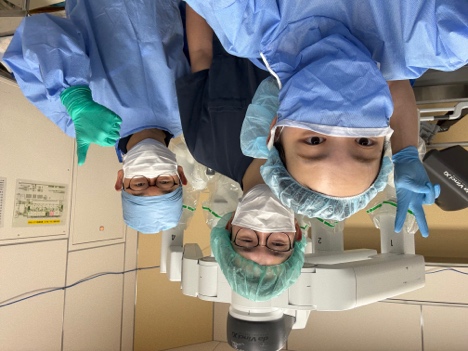
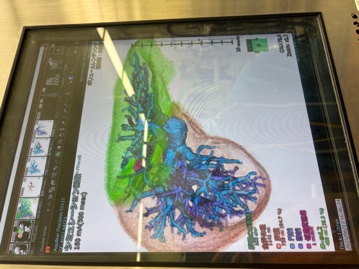
During the first two weeks of the exchange program, I rotated in the Department of Surgical Oncology. Throughout this period, I had the opportunity to observe a wide range of surgical procedures, including hepatectomy, pancreatectomy, and splenectomy, performed using both open and robotic approaches. I was also given the opportunity to scrub in and observe the operations at close range as an assistant, which allowed me to gain a deeper understanding of intraoperative decision-making and surgical techniques.Under the guidance of attending surgeons, I was instructed in basic surgical skills such as suturing and trocar insertion. This was my first experience performing trocar insertion in robotic surgery, making it a particularly meaningful and memorable learning experience. Participating directly in these procedures enhanced my understanding of minimally invasive and robotic surgical workflows and reinforced my interest in surgical oncology.In addition, this rotation provided valuable insight into the similarities and differences between surgical practices in Japan and Taiwan. At Nagoya University Hospital, nearly all patients underwent preoperative three-dimensional reconstruction imaging of the surgical field, which greatly facilitated surgical planning and anatomical orientation. This practice is relatively uncommon in my home institution. Conversely, although robotic surgery is also routinely performed at National Taiwan University Hospital, there was no significant difference between the two institutions in terms of operative duration, surgical approach, or procedural precision, reflecting a comparable standard of surgical care and technical expertise.
During the final two weeks of my exchange program, I rotated in the Department of Urology. In addition to time spent in the operating room, I had the opportunity to observe and participate in urological procedures such as ureteral stent insertion and exchange. I was also involved in ward activities, where I observed postoperative patients and was able to establish a clear connection between the surgical procedures I had witnessed and the postoperative care provided to patients. I was given several opportunities to scrub in, which allowed me to observe operations at close range and gain a more comprehensive understanding of urological surgical techniques. Through this experience, I also became aware of differences in the division of labor between Japan and Taiwan. Certain responsibilities managed by the urology team at Nagoya University are typically handled by nephrologists in Taiwan, highlighting variations in interdepartmental collaboration and clinical practice between the two healthcare systems. As I had only completed a one-week rotation in the urology department at my home institution, this rotation at Nagoya University provided a more structured exposure to the scope of urology.
Lastly, I am deeply grateful for the guidance and teaching provided by all the attending physicians and mentors during my exchange. The faculty members were consistently welcoming and supportive, and they made considerable efforts to translate explanations from Japanese to English, ensuring that I could fully understand the surgical procedures and clinical workflows despite the language barrier. I sincerely appreciate the many opportunities they offered for active participation in surgeries and other procedures, all of which contributed to a highly memorable and valuable learning experience.
Click here to read other stories
Nagoya University Graduate School of Medicine